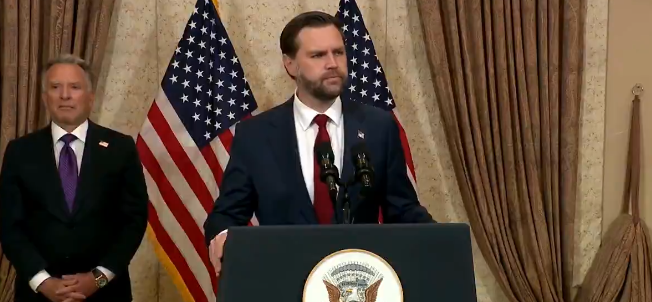

US-Iran peace talks in Islamabad, Pakistan, collapsed on Saturday without any agreement. The negotiations — the third round of direct, face-to-face talks since the war began — ended after roughly 21 hours when Iran refused to give the firm commitment the US demanded: a clear pledge that Tehran will not pursue nuclear weapons.
Vice President JD Vance, who led the American side, said the US had presented its “final and best offer.” He told reporters it was “bad news for Iran, much more than for the US” and that Washington now has to see an “affirmative commitment” on nukes. Iran’s delegation (71 people strong, including Parliament Speaker Mohammad Bagher Ghalibaf, Foreign Minister Abbas Araghchi, and central bank governor Abdolnaser Hemmati) blamed the Americans for looking for an excuse to walk away. Iranian state media reported no plans for a new round of talks.
The talks were held in an indirect format, mediated by Pakistan’s Prime Minister Shehbaz Sharif. They focused on technical issues such as implementing the fragile two-week ceasefire in Lebanon, possible extension of the truce, phased sanctions relief, and the Strait of Hormuz. Iranian outlets claimed some progress on those side topics and said the atmosphere was cautiously optimistic, but the US side stayed much quieter. Core sticking points — Iran’s nuclear program, missile production, support for armed proxies, and the fate of its uranium stockpile — were barely addressed and remain unresolved.
While the talks were happening, the United States took a very visible military step. Two Navy guided-missile destroyers (USS Frank E. Peterson and USS Michael Murphy) began clearing Iranian sea mines from the Strait of Hormuz — the first American warships to transit the waterway since the war started six weeks ago. President Trump publicly announced the operation on social media, calling it a “favor to the rest of the world” (naming China, Japan, South Korea, France, Germany, and others). He emphasized that Iran’s military has already been “completely destroyed”: its navy and air force are gone, anti-aircraft systems and radar are wiped out, missile and drone factories are obliterated, and its top leaders are dead. Trump said the US does not need a “backup plan” because Iran is holding “no cards.”
Iran had warned that any US vessel entering the strait would be targeted within 30 minutes and could derail the talks, but no incidents were reported. CENTCOM described the mission as establishing a safe new passage for global commerce.
On the ground in Lebanon, Israeli airstrikes continued over the weekend (killing at least 10 more people in the south on Saturday), raising the death toll from recent strikes to 357. Hezbollah said it supports the Pakistan-mediated dialogue but rejects any separate direct talks with Israel scheduled for Washington next week.
Markets reacted mainly in crypto: Bitcoin dropped sharply on the news of the failed talks, wiping out some of the post-ceasefire gains.