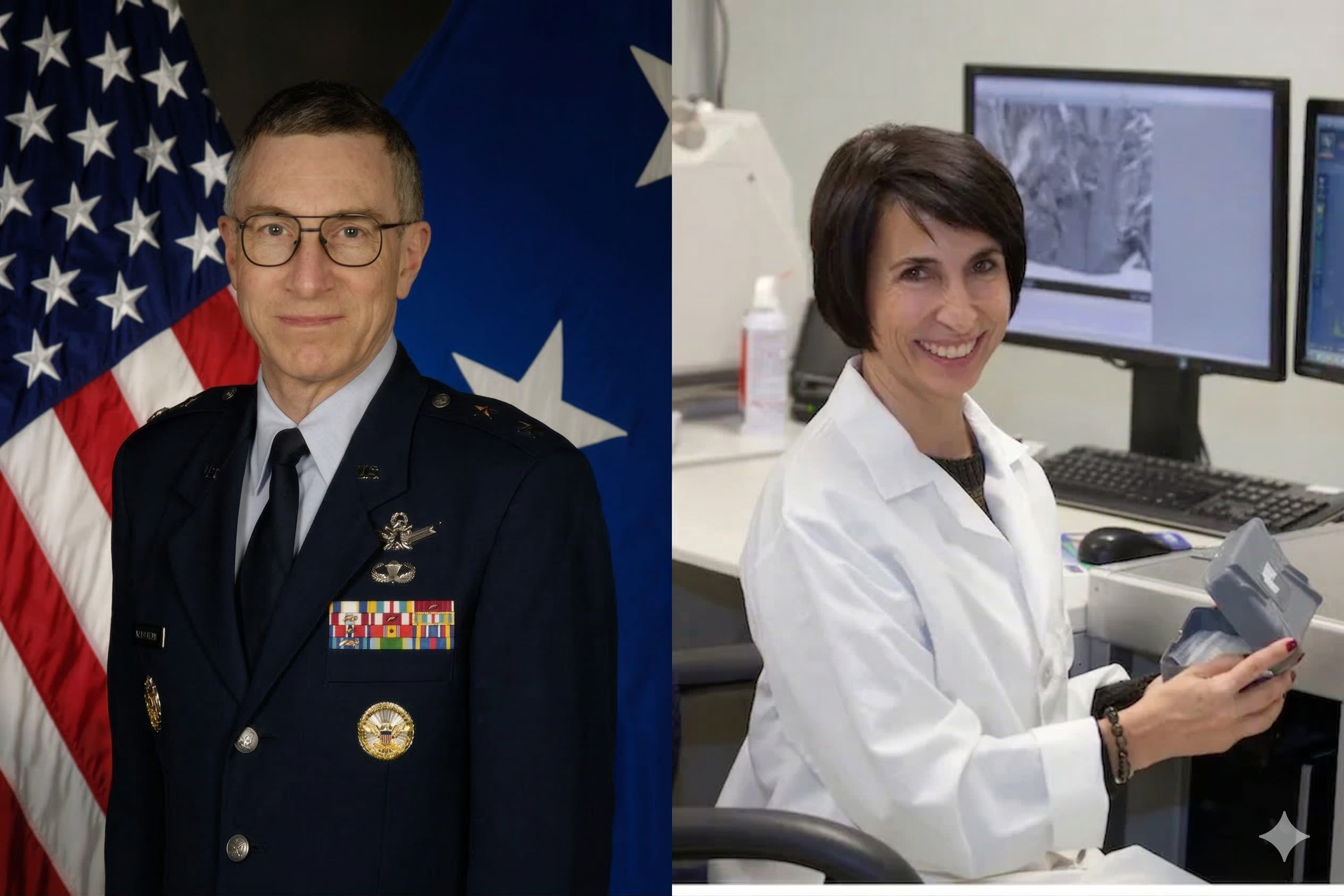

Two prominent figures in the U.S. aerospace and defense sectors—both with deep connections to advanced programs and now drawn into discussions around UFO/UAP disclosure—have vanished under strikingly similar circumstances months apart, raising questions among researchers, lawmakers, and national security observers about whether these cases represent tragic coincidences or something more concerning.
The Disappearance of Retired Air Force Maj. Gen. William Neil “Neil” McCasland
Retired Air Force Maj. Gen. William Neil “Neil” McCasland, 68, vanished on February 27, 2026, from his home in the Albuquerque, New Mexico, foothills. An experienced hiker and outdoorsman, McCasland left on foot around 11 a.m. for what appeared to be a routine outing. He left behind his cell phone, prescription glasses, and wearable devices. His wife returned from a medical appointment later that day to find him gone and reported him missing. A Silver Alert was issued due to medical concerns.
Authorities, including the Bernalillo County Sheriff’s Office, the FBI Albuquerque Field Office, and other agencies, launched extensive searches in the rugged terrain surrounding his home. Despite weeks of efforts involving ground teams, and with unseasonably warm spring weather complicating the search by accelerating decomposition if remains are present, no confirmed sightings, traces, or evidence of foul play have been publicly confirmed as of mid-March 2026. McCasland’s wallet, hiking boots, and a handgun were reportedly missing from the home.
McCasland’s military career included command of the Air Force Research Laboratory (AFRL) at Wright-Patterson Air Force Base in Ohio—a facility long associated in popular lore with the 1947 Roswell incident, Project Blue Book, and rumored storage of exotic materials. His name surfaced in the 2016 WikiLeaks release of John Podesta’s emails, where UFO advocate Tom DeLonge described McCasland as having “first-hand knowledge” of certain programs and involvement in advisory roles related to unconventional aerospace topics. DeLonge noted McCasland’s prior leadership at the lab where Roswell-related materials were allegedly sent.
The timing of his disappearance has fueled speculation: It occurred just days after President Donald Trump publicly directed the Pentagon and other agencies to prepare the release of all government records related to UFOs/UAPs and potential extraterrestrial phenomena. Trump stated he did not know if aliens exist but emphasized transparency on the files.
The Earlier Vanishing of Monica Jacinto Reza
Eight months earlier, on June 22, 2025, Monica Jacinto Reza (professionally known as Monica Jacinto), 60, disappeared while hiking in the Angeles National Forest near Los Angeles, California. A rocket materials scientist with affiliations to NASA’s Jet Propulsion Laboratory and Aerojet Rocketdyne, Reza was last seen around 9:10 a.m. near the 6,000-foot gate on Angeles Crest Highway, in the Mount Waterman Trail area. She was hiking with companions, briefly fell about 30 feet behind while smiling and waving, and then vanished.
Despite massive search efforts—including helicopters, K-9 units, ground teams from multiple California counties, and volunteers—nothing definitive was found. Her body has not been recovered, and no evidence of foul play was confirmed. Reza was described as an avid hiker, though some reports note she had not previously hiked that specific trail.
Reza’s professional work centered on advanced materials for rocket engines and reusable space vehicles. She is credited with developing or co-inventing “Mondaloy,” a patented nickel-based superalloy family designed for extreme high-temperature performance in rocket propulsion systems. Her research received direct funding from AFRL programs during the period when McCasland oversaw the laboratory. The alloy has been highlighted for potential use in next-generation national security launches and replacing foreign-sourced components.
Shared Connections and Lingering Questions
The two individuals were linked through the high-stakes world of aerospace and defense research. McCasland’s leadership at AFRL overlapped with funding for Reza’s advanced materials work. Both cases involved experienced outdoors enthusiasts disappearing in familiar “hiking” environments with limited personal items left behind or missing, and both searches have yielded no clear resolution despite significant resources.
Tennessee Congressman Tim Burchett, a leading advocate for UAP transparency and chair of related congressional efforts, has publicly expressed alarm over what he describes as a disturbing pattern involving scientists and researchers connected to advanced aerospace, nuclear, and potentially UAP-related programs. Speaking to media outlets, Burchett warned that “something dark is going on,” noting multiple deaths and disappearances of experts in these fields over the past year, including McCasland and Reza. He has called McCasland’s vanishing a “major national security issue,” given the general’s access to sensitive nuclear secrets and alleged involvement with unconventional technologies, and suggested the cases—along with others—warrant deeper scrutiny rather than dismissal as coincidence. Burchett has voiced skepticism toward official explanations and urged greater attention amid the broader push for UFO/UAP disclosure, stating that the timing and circumstances are too suspicious to ignore.
UFO/UAP researchers and some commentators have pointed to the broader context: heightened public and official interest in disclosure, McCasland’s historical mentions in Podesta-era emails, and the sensitive nature of their expertise in propulsion, materials science, and classified programs. Figures in the UAP community, including investigative journalists, have described the pattern as “alarming” and worthy of deeper scrutiny for potential national security implications.
Official investigations continue to treat both as missing persons cases without confirmed criminal elements. Searches for McCasland remain active in New Mexico, while Reza’s case stays open with the Los Angeles County Sheriff’s Department. Authorities have appealed for any surveillance footage or tips from the relevant dates and areas.
Whether these incidents prove to be unrelated tragedies—common risks in remote hiking and outdoor activities—or reflect deeper patterns amid the ongoing push for UAP transparency remains an open and increasingly discussed question in both mainstream reporting and specialized communities. As searches persist without closure, the synchronicity continues to prompt calls for thorough, transparent examination beyond initial assumptions.