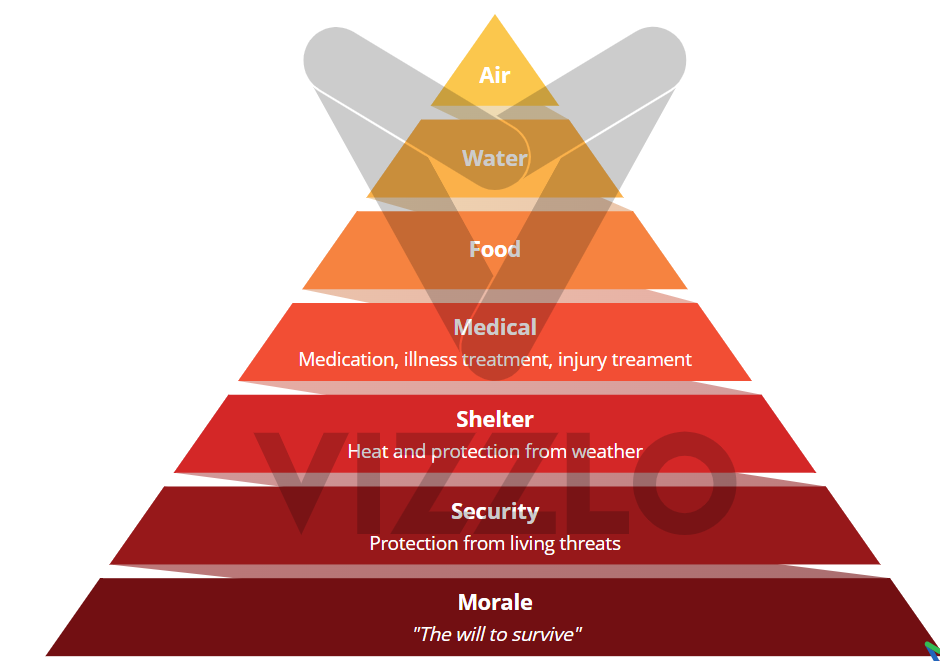
When it comes to survival—that is, surviving—there are several things that are not just important but absolutely necessary to survive. This becomes especially clear in a survival situation, where there’s no backup plan, no emergency services, and no safety net. Survival doesn’t care about comfort or convenience; it’s about staying alive. And to do that, certain essentials must be secured in a particular order. Ignore that order, and the consequences are fatal.
Air:
Without air, you die in about four to six minutes. That’s the hard, unforgiving truth. If you’re choking, drowning, or breathing in smoke or toxic fumes, your window for survival closes almost immediately. Air is priority number one. You don’t have time to think or improvise—you have seconds. A blocked airway, bad air, or suffocation is death in short order. Every other concern takes a back seat until you can breathe.
Water:
You can go about three days without water. Maybe less if you’re in a hot environment or physically active. Dehydration causes confusion, cramps, dizziness, and eventually shuts your organs down. It creeps in quietly, but kills just as surely. In the wilderness, stagnant water might make you sick, but no water will make you dead. You can treat a stomach bug. You can’t treat dying of thirst. Find water early, and secure it every single day. Further, the proper filtration and treating/purifying of water is also crucial to avoid getting sick from the water (which can cause symptoms ironically leading to dehydration).
Food:
Food is a longer-term concern, but that doesn’t make it less important. The body can survive for one to three months without food, depending on fat reserves and physical activity. But long before death, starvation starts stripping you of strength, clarity, and willpower. You become weak, disoriented, and vulnerable to illness. In real-life survival, most people won’t last more than 45 to 60 days without food. And even those who do are in no condition to fight, travel, or think clearly. Starving doesn’t just kill the body—it robs it of the strength to endure.
Medical:
Medical needs vary wildly, but they always matter. If you’ve got a bleeding wound, you might have five minutes. A bad infection? A few days. Missing prescription medication can also turn into a death sentence within hours or days. Whether it’s trauma, illness, or chronic conditions, your body won’t keep functioning without intervention. Most people don’t die from the big stuff—they die from the small things left untreated. In survival, you either know how to patch yourself up or you don’t get the chance to learn.
Shelter:
Exposure kills quicker than most people realize. Cold, wind, rain, or even direct sun can end you in hours. Hypothermia can take hold fast, especially if you’re wet or the temperature drops suddenly. On the flip side, extreme heat without shade or hydration causes heatstroke, which can also kill in a matter of hours. Shelter isn’t just a roof over your head—it’s any method of protecting your core body temperature. Your body’s internal fire is everything. Lose that, and you’re done.
Security:
A single gunshot, a stab wound, or even a blow to the head can end your life in seconds. And if it doesn’t, you might bleed out in minutes. In hostile environments—whether it’s a post-collapse city, a foreign war zone, or even a dangerous stretch of land—you must be able to defend yourself. Predators, both human and animal, are a reality. It’s not paranoia. It’s preparedness. If you can’t secure your surroundings or protect your life, all your food and water won’t matter.
Morale:
This one doesn’t get talked about enough, but it should. Morale is the slowest killer, but often the most certain. The human mind is fragile under stress. Fear, hopelessness, isolation—they don’t show up in your bloodstream, but they’ll kill just the same. People who stop believing they can survive, don’t. Depression leads to apathy. Apathy leads to mistakes, and mistakes kill. Morale isn’t about false hope or pretending things are fine. It’s about grit. Discipline. Purpose. Without it, the strongest body will still fail.
In survival, these seven things—air, water, food, medical, shelter, security, and morale—aren’t just helpful; they’re vital. They don’t all kill at the same pace, but they all kill in the end. If you understand the order and act accordingly, your chances go up. Ignore them, or treat them like theory, and you may not get a second chance.
Live in preparation. Prepare to survive.
Comments